






Brent Crude Oil is the world's foremost crude oil benchmark. Extracted from the North Sea, it is a light, sweet crude characterised by low sulphur content and a high yield of refined products such as gasoline, diesel, and jet fuel. These qualities have established Brent as the pricing reference of choice across European, Asian, and Middle Eastern markets. Today, approximately two-thirds of all internationally traded crude oil is priced with reference to Brent.
Its price influences fuel costs, inflation, trade balances, and energy policy decisions across the globe. Governments, central banks, national oil companies, and financial institutions track Brent as a primary gauge of global energy market conditions.
India, the world's third-largest crude oil consumer, imports over 85% of its requirements which is procured under contracts primarily priced against Platts Dated Brent Benchmark, the physical market assessment published by S&P Global Energy and the globally accepted pricing standard in crude supply contracts worldwide.
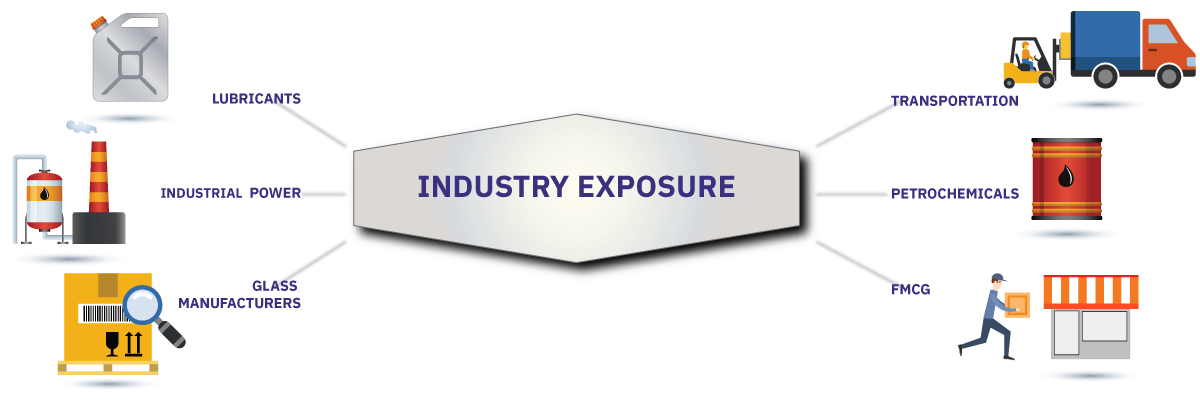 (Crude oil price movements affect multiple industries like lubricants, power, glass, transport, petrochemicals, and FMCG)
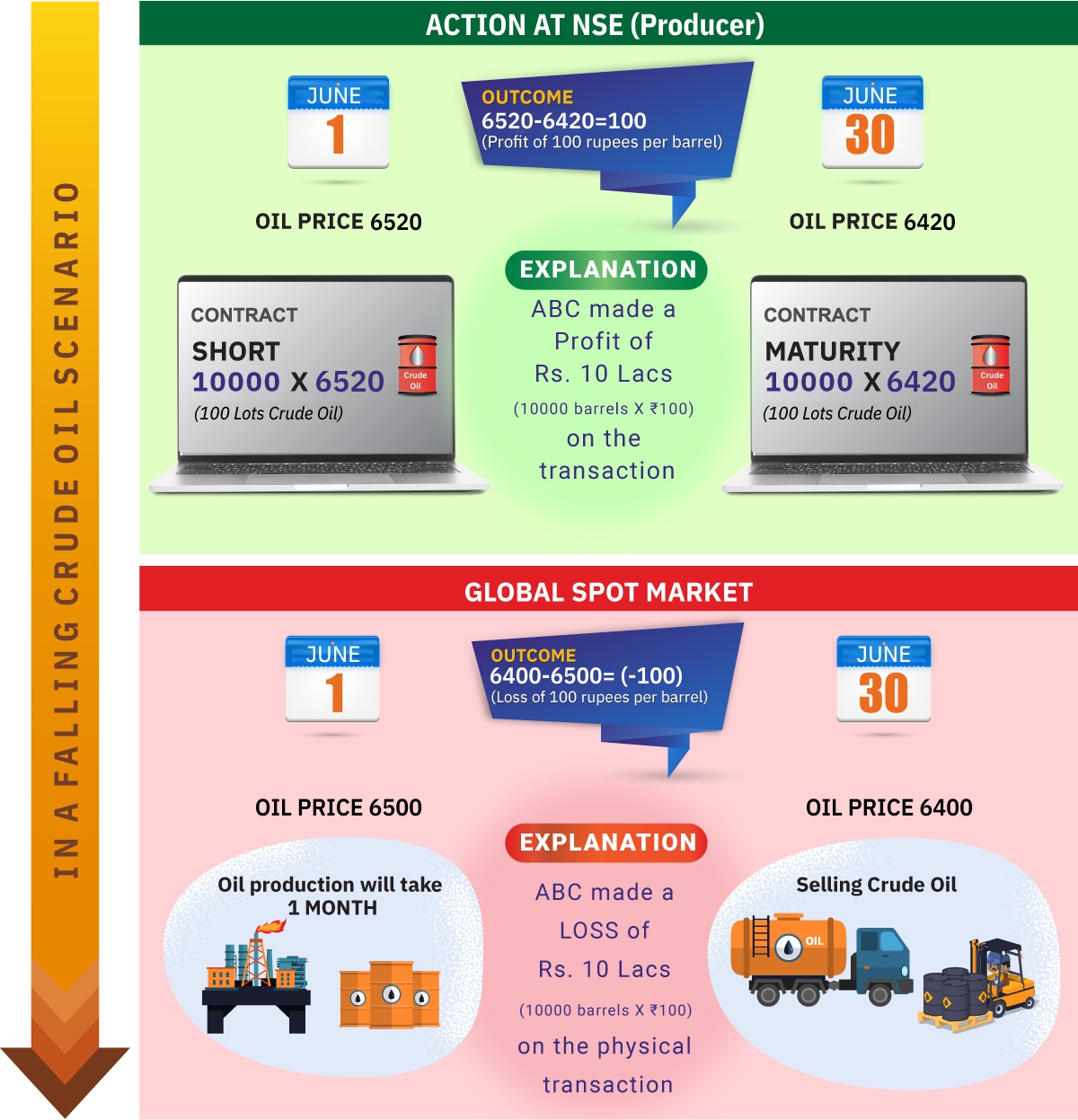
(In a falling crude oil price environment, a producer named ABC uses NSE Dated Brent Crude Oil (Platts) futures to hedge.
ACTION AT NSE (Producer) – Hedged Position
- June 1: ABC, the producer, expects crude oil prices to fall. So, they short 100 lots (10,000 barrels) of crude oil futures at ₹6520/barrel on NSE.
- June 30: The price drops to ₹6420/barrel.
- Outcome: The short position gains ₹100/barrel, resulting in a profit of ₹10 lakhs (10,000 barrels × ₹100).
GLOBAL SPOT MARKET – Physical Sale
- June 1: ABC begins oil production when the spot price is ₹6500/barrel.
- June 30: By the time the oil is ready to sell, the price has dropped to ₹6400/barrel.
- Outcome: ABC incurs a loss of ₹100/barrel, totalling ₹10 lakhs (10,000 barrels × ₹100).
The ₹10 lakh profit from the futures contract offsets the ₹10 lakh loss in the physical market. This demonstrates how hedging with NSE Dated Brent Crude Oil (Platts) futures can protect producers from adverse price movements in volatile markets.)
(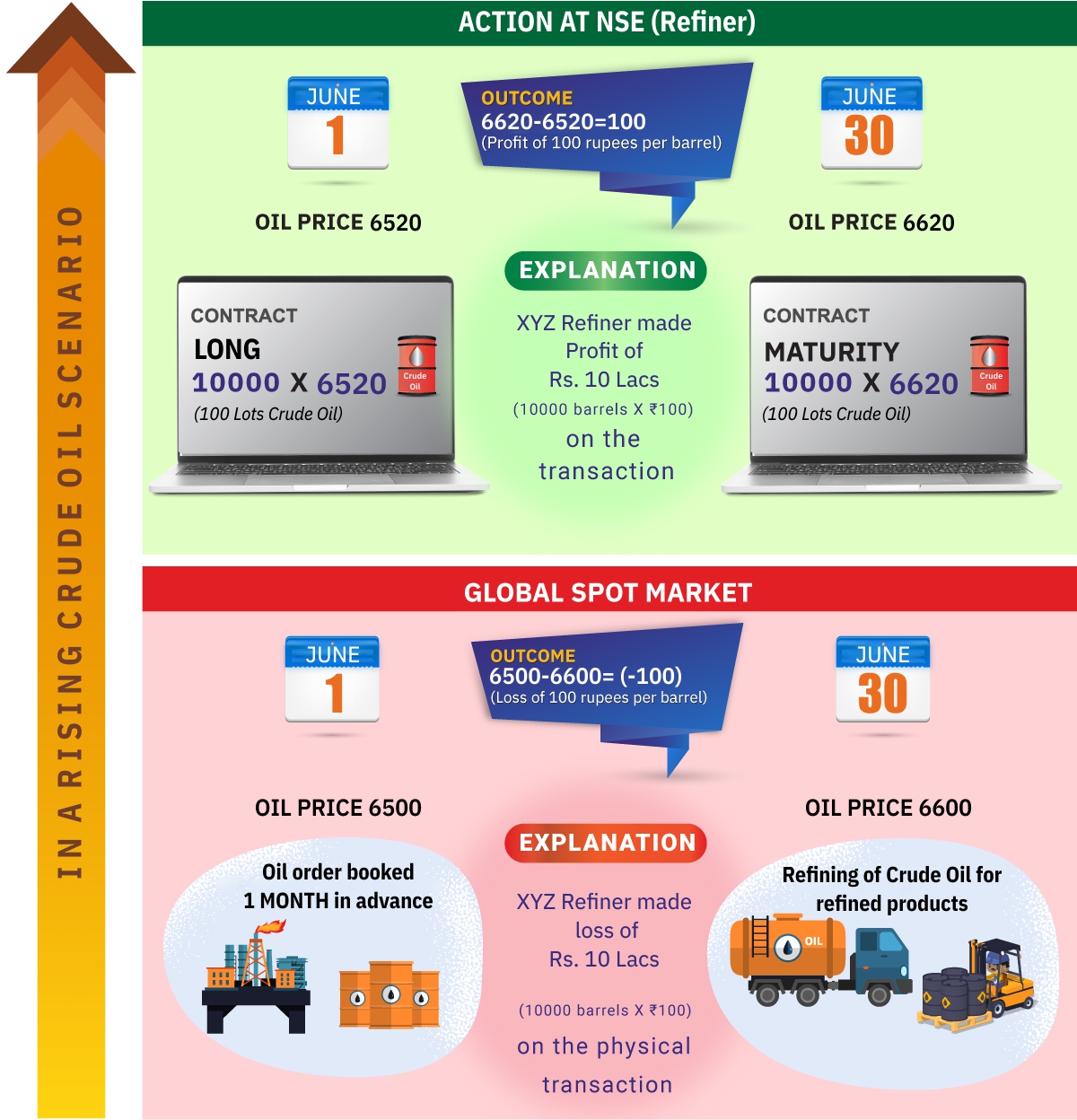
(In a rising crude oil price environment, a refiner named XYZ uses NSE Dated Brent Crude Oil (Platts) futures to hedge.
ACTION AT NSE (Refiner) – Hedged Position
- June 1: XYZ, the refiner, anticipates a rise in crude oil prices. So, they go long on 100 lots (10,000 barrels) of crude oil futures at ₹6520/barrel on NSE.
- June 30: The price increases to ₹6620/barrel.
- Outcome: The long position gains ₹100/barrel, resulting in a profit of ₹10 lakhs (10,000 barrels × ₹100).
GLOBAL SPOT MARKET – Physical Purchase
- June 1: XYZ books crude oil one month in advance where spot price was ₹6500/barrel
- June 30: The price rises to ₹6600/barrel, and XYZ must now purchase at the higher rate.
- Outcome: XYZ incurs a loss of ₹100/barrel, totaling ₹10 lakhs (10,000 barrels × ₹100).
The ₹10 lakh profit from the futures contract offsets the ₹10 lakh loss in the physical market. This demonstrates how hedging with NSE futures helps refiners manage rising input costs and maintain financial stability)
Updated on: 30/03/2026
 GIGW Compliant